

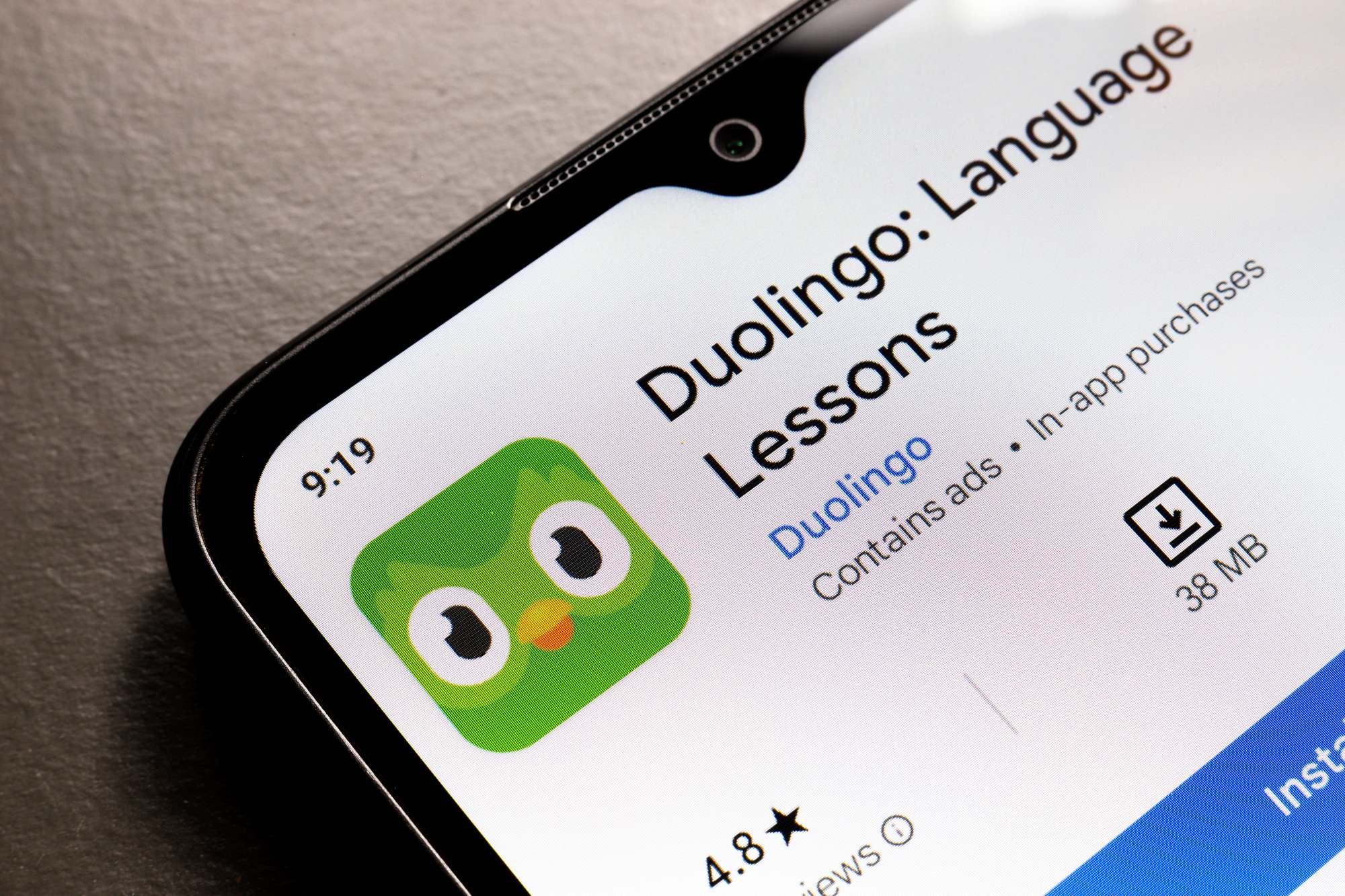

Almost every week, someone emails me to say they’ve been grinding away on Duolingo and just found out it teaches Brazilian Portuguese, not European Portuguese. I’ve genuinely lost count of how many times this has happened.
I don’t think most people realize the two can differ enough to matter.
And, they do matter. It’s not quite the gap between American and British English, where you’ll be understood everywhere and nobody blinks. It’s not even the difference between learning Spanish in Latin America and then coming to Spain.
Speak Brazilian Portuguese in Lisbon and there’s a decent chance you’ll get gently corrected, or met with a blank stare.
One learner put it bluntly on Reddit: they flew into Lisbon, tried the accent Duolingo taught them, got laughed at, and ended up falling back on Spanish or English because nobody could follow their Portuguese.
“I just flew into Lisbon, and started talking to people at restaurants with an accent I learned from Duolingo, and I literally got laughed at…I’ve wound up just speaking in Spanish or English, since nobody has any idea what I’m saying in Portuguese.” – /u/SageEel
That’s a rough reward for months of effort. So if Portugal is the plan, learn European Portuguese from the start. Practice Portuguese (discount here) is a great place to start as it’s also an app and at around €12.75 a month, it’s very affordable.
The bigger problem With Duolingo
Here’s the part that gets me in trouble. Even if Duolingo did teach European Portuguese, I still wouldn’t build your learning around it. Duolingo, even in the languages it fully supports, does not get people to fluency.
That isn’t just me being difficult. Steve Kaufmann, a well-known polyglot who has spent decades learning more than 20 languages, recently made much the same argument. His take is that Duolingo is extremely good at keeping people engaged, but engagement and language learning are not necessarily the same thing.
The streaks, points, leagues and cheerful little threats from an owl are all designed to keep you opening the app. And they work. But after a year, you may have become very good at maintaining a streak without becoming particularly good at understanding an actual person. Kaufmann describes Duolingo as essentially a gamified word-retrieval system: lots of disconnected words and short phrases, but not enough meaningful language in context.
His bigger point is that people learn vocabulary and sentence structure by repeatedly meeting them inside material they can understand and actually care about.
That means listening to conversations, reading stories, watching videos and hearing the same words used naturally in different situations. Over time, you stop translating everything and start developing a feel for what should come next. Duolingo gives you some exposure, but nowhere near enough of this richer input.
He isn’t completely anti-Duolingo. He sees it as a decent introduction: it makes an unfamiliar language feel less intimidating, teaches you a few words and gets you into the habit of doing something every day. But he thinks it should be the doorway into real listening and reading, not the room you stay in for the next three years.
I’d go further and say don’t really use it at all, particularly for European Portuguese. Your time is better spent almost anywhere else. Because learning a language does take time and effort, and I want to be honest with you about that.
You do not learn Portuguese in five minutes a day. You don’t learn it in ten minutes a day either. Anyone selling you that idea is selling you a streak, not a language.
The honest downside With Other Resources
I’m not going to pretend the alternatives are as slick. Nothing in European Portuguese comes close to Duolingo as a piece of software. That’s the trade-off, and you should know it going in.
People love the little bird. They love the streaks, the leaderboards, the notifications nudging them back in. I get the appeal completely, and it’s a real reason Duolingo works as a habit.
Unfortunately, if you’re trying to learn European Portuguese, there’s no equivalent that’s quite as polished (and I’ve reviewed them all). You’re going to have to be the one who keeps yourself accountable, without a passive-aggressive owl guilt-tripping you every evening. That’s the deal.
What actually matters for European Portuguese
Before I get to apps, the two skills that really move the needle are listening first and speaking second. European Portuguese is fast, it swallows syllables, and it’s full of nasal sounds English doesn’t have. If your ear isn’t trained, you’ll freeze the moment a real person opens their mouth.
Duolingo doesn’t build either of those skills in any serious way. Tapping words into place is not the same as understanding a Portuguese person at full speed, or forming a sentence out loud under pressure. So whatever you use, prioritize input you can actually listen to and chances to speak.
The app I’d actually recommend: Practice Portuguese
If you want the closest thing to a Duolingo-style app that’s genuinely European Portuguese, Practice Portuguese is the one. The units section will feel familiar, with grammar and vocabulary you work through step by step.
Where it earns its place, though, is the “Shorties” — short audio conversations recorded by native speakers, with transcripts and explanations. Spoken European Portuguese is brutal to follow at first, so having real audio you can replay and read along with is a genuine gift. That’s exactly the listening practice Duolingo never gives you.
It runs from around €12.75 a month, covers roughly A1 to B2, and there’s a free tier so you can try before committing. The audio is recorded by actual humans rather than a text-to-speech robot, which matters more than it sounds. This is the one I’d build a routine around.
Memrise can be pretty good too
Memrise is the other one worth a look, and importantly it has an official European Portuguese course, not a Brazilian one. Its standout feature is short video clips of locals actually saying the words and phrases, so you’re hearing real pronunciation instead of a synthetic voice. It’s free, or somewhere around €2 a month for the paid tier.
One 2026 heads-up: Memrise spent a couple of messy years shuffling its user-made “community courses” around, so older links to specific European Portuguese decks may not work anymore. User word lists have since returned, but if a recommended deck has vanished, that’s why. Stick to the official course and you’ll be fine.
If you’re a bit of a techie, Anki is a less user-friendly option but one that’s extremely popular among polyglots.
Why I’m not a fan of Drops
Drops does let you choose European Portuguese, and the pronunciation is decent, so on paper it looks like a good pick. It’s around €6 a month, with a free tier capped at about five minutes a day, and a lifetime plan floating around too. But I don’t really recommend it, for the same reason I steer people away from Duolingo.
It drills isolated vocabulary in a slick, gamified way, and that’s not the same as learning to communicate. Knowing a hundred nouns doesn’t help much if you can’t string a sentence together or follow a reply. Treat it as a light side snack at most, never the main meal.
If you’re serious, look beyond apps
Once you accept that no app is going to carry you to fluency, the honest next step is a proper course. These aren’t apps, so if you specifically want a Duolingo replacement to tap at on the bus, they’re not it. But if you actually want to get somewhere, this is where I’d put my money.
Talk the Streets, run by Liz Sharma, is one I happily point people to, and she has free training you can start with before paying a cent. Mia Esmeriz also runs solid online courses covering A1 up to B2. Both teach the pronunciation and structure that the free apps quietly skip over.
Mia, for what it’s worth, is sympathetic about the Duolingo trap. She understands why people land there — it’s easy, engaging, and good European Portuguese resources are genuinely hard to find. But her line is the one I’d leave you with: if you’re serious about European Portuguese, that’s not the path to stay on.
You still need to actually speak
The one thing no app fixes is speaking to a real human who corrects you. This is the skill people avoid most and need most. You can build your ear for months and still seize up the first time someone answers back.
For that, I really like iTalki (or Preply) — you can find tutors from Portugal and get the corrective feedback nothing automated provides. You don’t need a lesson every day. Even one every week or two, especially early on, is worth more than another month of tapping through an app.
The bottom line
Skip Duolingo.
Not just because it’s Brazilian Portuguese, but because it won’t get you where you want to go regardless. Accept that the alternatives are less shiny, put listening and speaking at the center, build your routine around Practice Portuguese, and add a real human for feedback when you can. Do that and you’ll be far further ahead than another year of streaks would ever get you.
 Thinking about Moving to Portugal?